Neanderthals: beyond the brute

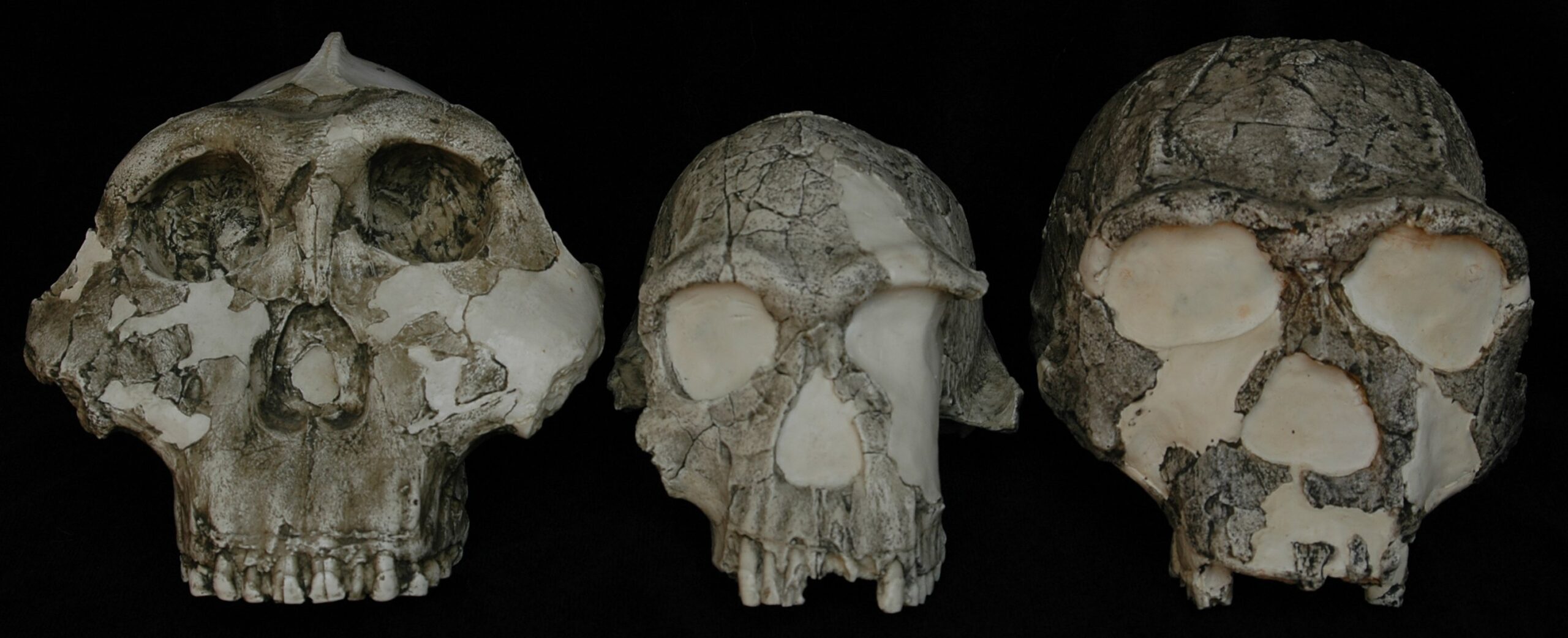
For the general public, Neanderthals are probably the best-known of all our human relatives. Yet they have long been burdened by an unflattering stereotype. Being called a “Neanderthal” is rarely meant as a compliment. Years ago, I had the opportunity to examine original Neanderthal skulls at the Musée de l’Homme in Paris. Among them was the skull of La Ferrassie 1, shown on the left in the accompanying image. Their projecting faces, lack of a distinct chin, and massive brow ridges probably helped fuel the stereotype of the Neanderthal as a brute.
Today, growing genetic and archaeological evidence seems to challenge this traditional brute stereotype, suggesting that Neanderthals may have been more cognitively capable than long assumed. Genetic studies have shown that Neanderthals and modern humans were closely related enough to interbreed, leaving traces of Neanderthal DNA in many people living today. While genetic relatedness alone does not determine cognitive abilities, it highlights how biologically similar Neanderthals were to ourselves and cautions against assuming large cognitive differences.
However, this reassessment is not entirely new. By the mid-twentieth century, some researchers had already begun to question the traditional portrayal of Neanderthals as brutish and primitive. The implication was that, if provided with modern clothing and grooming, a Neanderthal might have attracted fewer curious glances in a city crowd than earlier depictions suggested. The facial reconstruction shown in the accompanying image reflects this view.
From a biological perspective, the idea that Neanderthals were cognitively capable is not particularly surprising. Although their skulls differ in several respects from our own, one fact has been known since their discovery: Neanderthals had large brains. The evolution and maintenance of such large brains would have imposed considerable energetic costs, suggesting that they likely provided advantages. While brain size alone does not tell us everything about intelligence, this observation sits uneasily with the image of the Neanderthal as a dim-witted brute.
Archaeological discoveries have further complicated this traditional view, revealing behaviours that appear to have required planning, technical skill, and the transmission of knowledge across generations. One example is a 50,000-year-old tar-hafted flint tool found on the Dutch North Sea coast and attributed to Neanderthals (Niekus et al., 2019). This suggests a degree of technical understanding, including how different materials could be combined. Taken together, the available evidence provides little support for the traditional view that Neanderthals were cognitively inferior to modern humans.