Loschbourman: A Biological Anthropological Perspective on a Mesolithic Hunter-Gatherer
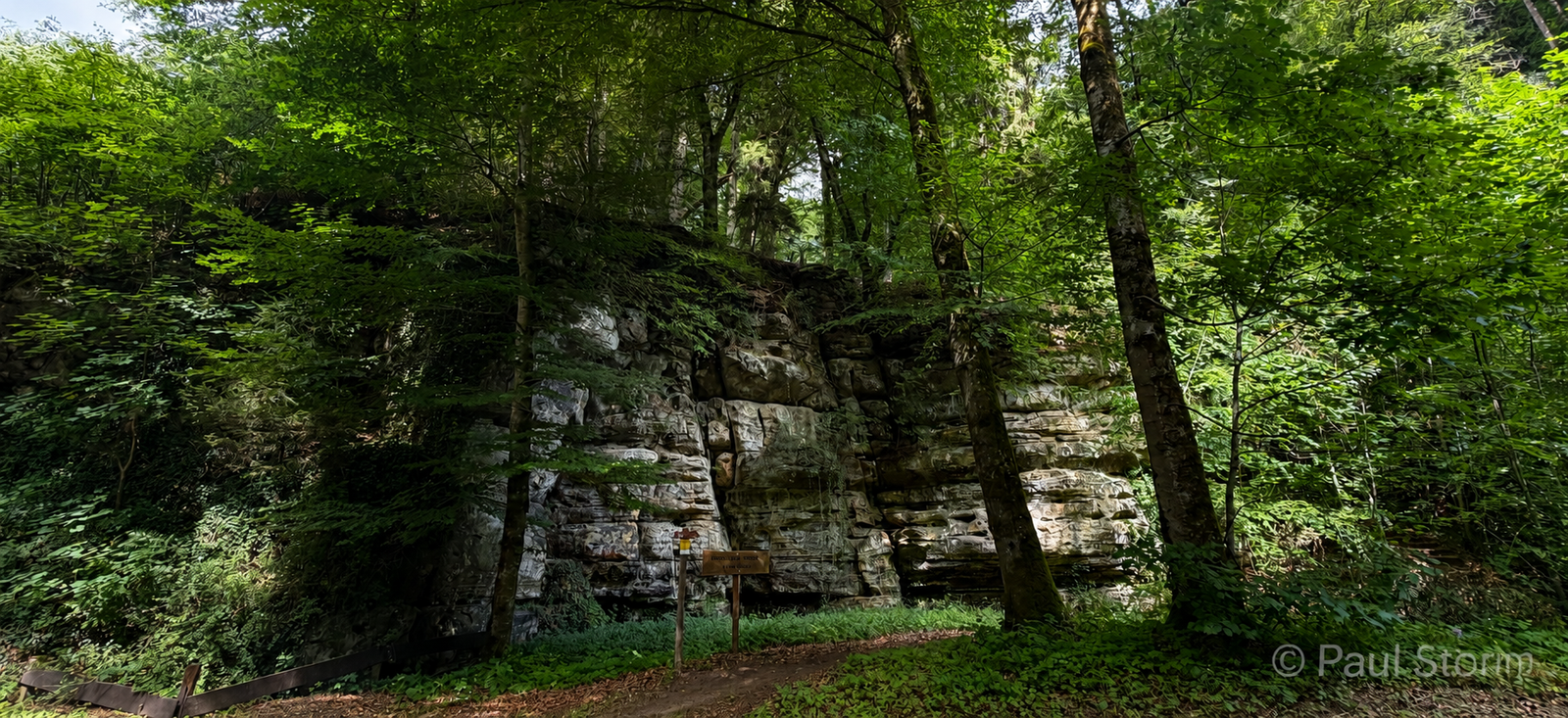
In 1935, an exceptionally well-preserved skeleton of a man was discovered in the Loschbour rock shelter (abri), located in the valley of the Schwarze Ernz in Luxembourg. He had found his final resting place there approximately 8,000 years ago, during the Middle Stone Age (Mesolithic). Remarkably, the overall landscape setting has remained largely intact, allowing visitors to appreciate the environment in which the Loschbourman found his final resting place. Finds such as this provide us with a unique insight into the lives of the last hunter-gatherers of Western Europe.
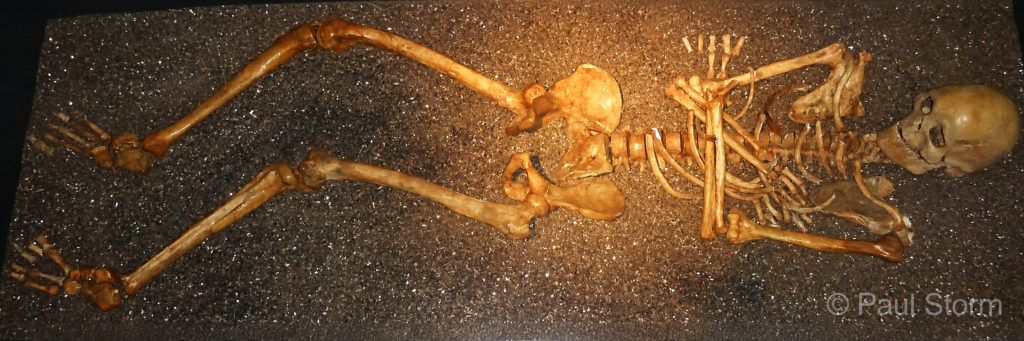
At the Musée national d’histoire naturelle, where the skeleton is on display, the Loschbourman’s stature is estimated at approximately 160 cm and his body mass at 58 to 61.5 kg. Based on femoral measurements from a skeletal database, his estimated stature is 160.6 cm and his estimated body mass is 56.2 kg. The estimated stature corresponds closely to that reported by the museum, whereas the estimated body mass is lower. Based on these estimates, the Loschbourman appears to fall well within the observed range of body size variation of the nine Mesolithic males (including the Loschbourman) currently available from Western Europe.
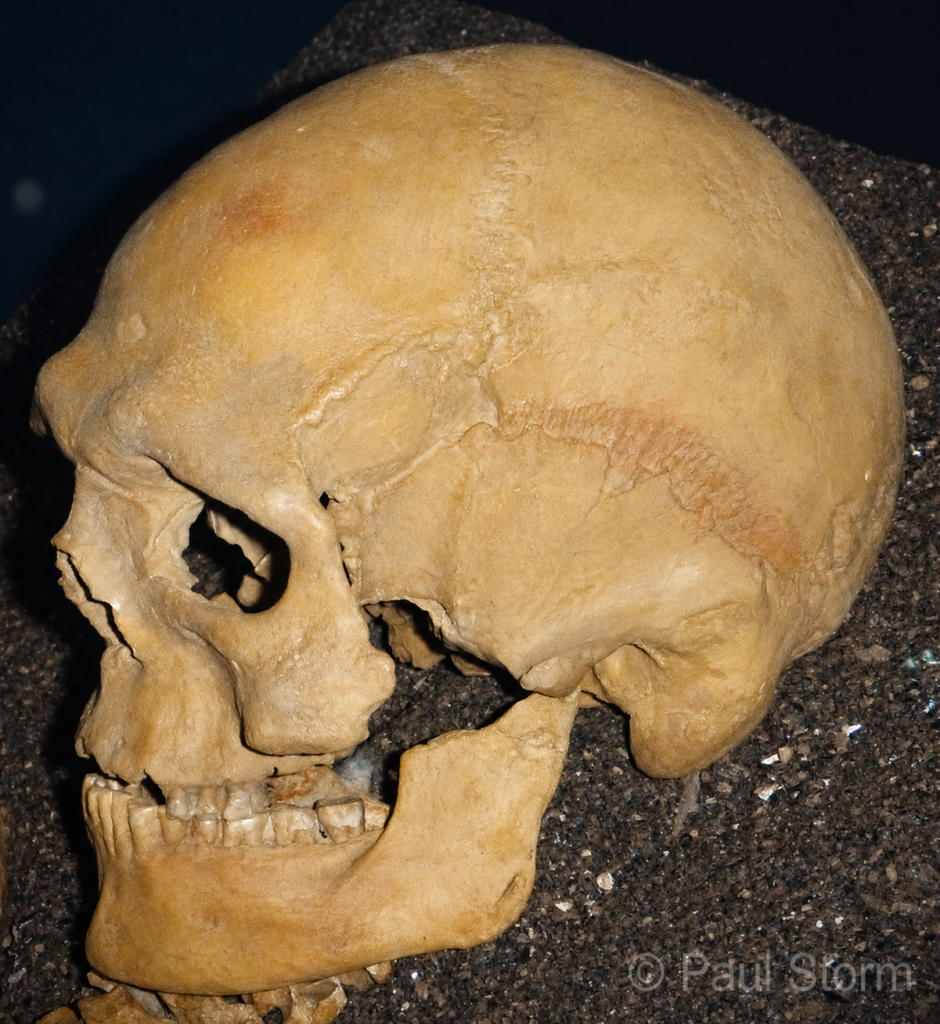
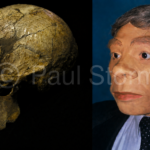
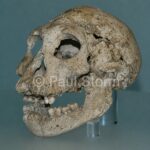
The original skeleton is exhibited in the museum, with the exception of the skull, which has been replaced by a replica. Nevertheless, several cranial features can be assessed. The skull displays clear male characteristics, including a sloping forehead, prominent brow ridges, and a large mastoid process behind the external auditory canal. Several measurements of the mandible are also more consistent with those of a male than a female. By contrast, the upper and lower molars are relatively small when compared with those of other Mesolithic males from Northwestern Europe. That the individual was indeed male has been confirmed by DNA analysis.
According to the museum, the Loschbourman’s endocranial volume is 1,584 cm³. This is larger than the average endocranial volume of modern humans, which is approximately 1,400 cm³. It should be noted, however, that males have, on average, a larger endocranial volume than females. Humans (Homo sapiens) living before approximately 12,000 years ago also had, on average, a larger endocranial volume than people today.
One feature of the Loschbourman that caught my attention is the presence of a retromolar gap on the left side of the mandible. This is the open space between the last molar and the ascending ramus of the mandible and is regarded as one of the classic Neanderthal traits. However, this feature also occurs in humans (Homo sapiens), including Upper Paleolithic individuals from Central Europe and Mesolithic individuals from Doggerland beneath the present-day North Sea. In these prehistoric hunter-gatherers, a retromolar gap indicates a relatively spacious dental arch, in contrast to many people today, in whom crowding of the dental arch is common. This difference may partly reflect changes in diet and masticatory loading associated with the transition to agriculture.
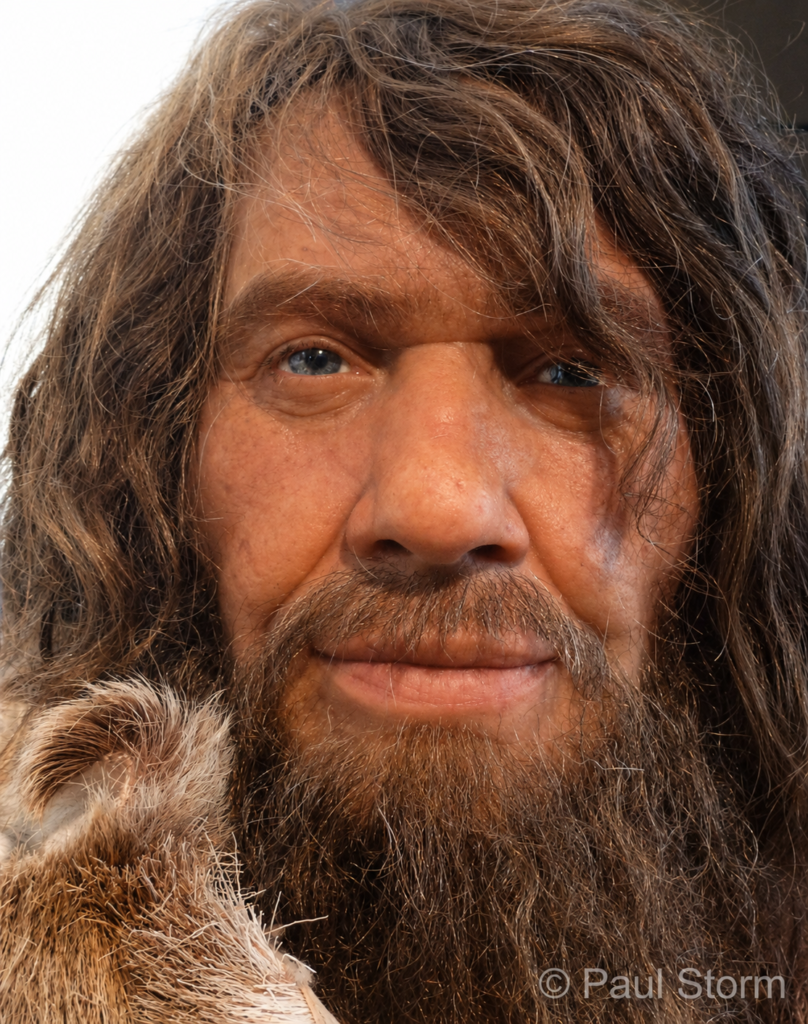
Based on the features discussed here, the Loschbourman, with the exception of his relatively small molars, appears to fit well within the range of variation observed among male Mesolithic hunter-gatherers. As such, he offers a valuable glimpse into some of the biological characteristics of the last hunter-gatherers of Western Europe.