
Skip to content
Tracing Humanity in Nature

Tracing Humanity in Nature

  • Home
  • Blogs
  • Publications Prehistory
  • Publications Natricid Snakes
  • Contact
Tracing Humanity in Nature
  • Neanderthals: beyond the brute

    Neanderthals: beyond the brute

    June 9, 2026June 9, 2026

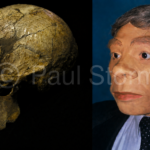
    For the general public, Neanderthals are probably the best-known of all our human relatives. Yet they have long been burdened by an unflattering stereotype. Being called a “Neanderthal” is rarely meant as a compliment. Years ago, I had the opportunity to examine original Neanderthal skulls at the Musée de l’Homme in Paris. Among them was…

    Read More Neanderthals: beyond the bruteContinue

  • Is Our Flat Face a Sign of Self-Domestication?

    Is Our Flat Face a Sign of Self-Domestication?

    May 26, 2026

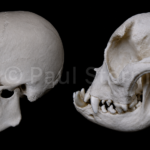
    Humans have remarkably flat faces compared with the other living apes. As early as 1945, the anthropologist Franz Weidenreich noted in his book “Apes, Giants, and Man” striking similarities between the evolution of human skulls and the changes seen in domesticated dogs. In both cases, evolutionary change appeared to involve a relative enlargement of the…

    Read More Is Our Flat Face a Sign of Self-Domestication?Continue

  • Dmanisi skulls illustrate Darwin’s idea of gradual evolution

    Dmanisi skulls illustrate Darwin’s idea of gradual evolution

    May 24, 2026May 26, 2026

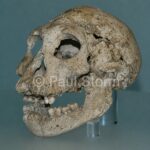
    During the Darwin Year in 2009, a sensational skull from Dmanisi (Georgia) was on display at Naturalis in Leiden, the Netherlands. Not a replica like the ones we often encounter in museums, but the original itself! The finds from Dmanisi are among the oldest known remains of the genus Homo outside Africa (about 1.77 million…

    Read More Dmanisi skulls illustrate Darwin’s idea of gradual evolutionContinue

© 2026 Tracing Humanity in Nature - WordPress Theme by Kadence WP

  • Home
  • Blogs
  • Publications Prehistory
  • Publications Natricid Snakes
  • Contact